Canadian Wildfire Smoke Strands Over 9,000 Passengers at San Juan Airport
CoquiList · With information from El Nuevo Día
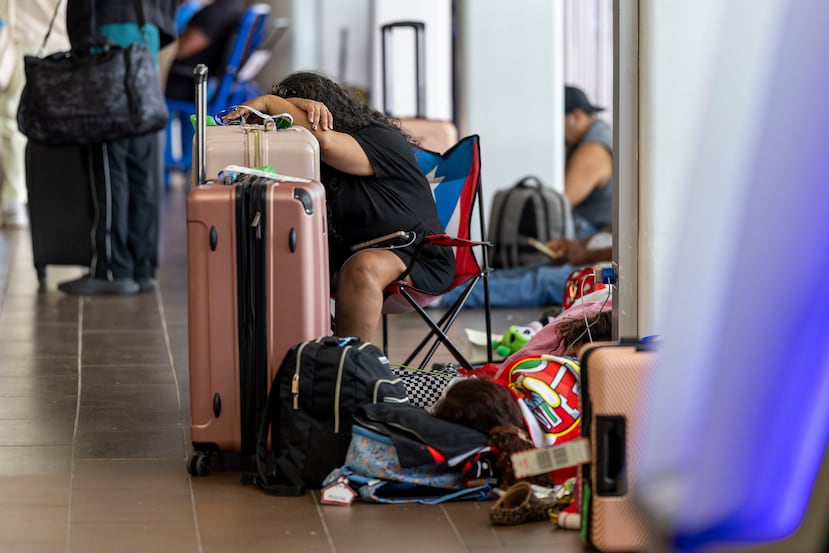
Smoke from wildfires burning in eastern Canada once again paralyzed a large share of air traffic at Luis Muñoz Marín International Airport (SJU) during the week of July 19 to 22, leaving more than 9,035 passengers stranded or with disrupted itineraries, according to figures Aerostar Airport Holdings — the company that manages the Carolina terminal — shared with local press1. It was the month's second wave of mass cancellations: a similar episode in early July had already affected roughly 50 flights4, a sign that Canada's wildfire season is turning into a recurring headache for Puerto Rican travelers.
The problem isn't in Puerto Rico — it's more than 2,000 miles away. Dense smoke from Canadian wildfires has reduced visibility at several airports in the northeastern United States, particularly at New York's JFK, the main hub for JetBlue Airways, the carrier with the most routes to and from San Juan12. When JFK cuts its landing and takeoff capacity because of low visibility, the ripple effect lands directly on SJU, since much of the fleet serving Puerto Rico depends on those connections.
Nelman Narváez, Aerostar's director of operations, explained that reduced visibility caused by smoke from Canada's forest fires affected several northeastern airports, "particularly JFK, an important hub for JetBlue"1. The airline had to cancel or delay flights in a chain reaction to reposition aircraft and crews.
The day-by-day numbers tell the story. On Sunday, July 19, about 16 flights were cancelled, affecting roughly 3,200 passengers1. On Tuesday the 21st, Metro Puerto Rico documented 12 additional cancellations operated by JetBlue and Frontier, affecting approximately 1,557 passengers, on routes to and from Orlando, Newark, Philadelphia, Boston, White Plains, New York, Hartford, Fort Lauderdale, and Santo Domingo2. That same day, Periódico Presencia reported the cancellation count reached 20, with Delta also among the airlines hit3. By Wednesday the 22nd, Aerostar reported 14 additional flights suspended that day alone — eight with arrival problems (six cancelled and two delayed) plus six departure cancellations — pushing the week's cumulative total past that 9,000-passenger mark1.
What This Means for You
If you have a trip planned to or from the northeastern United States in the coming weeks, this affects you directly. Canada's wildfire season typically runs through late August or September, and meteorologists warn that smoke can travel hundreds of miles and cut visibility even when there's no bad weather locally in Puerto Rico2. In other words: it can be sunny in Carolina and your flight can still get cancelled because JFK, Newark, or Boston can't operate normally. The most exposed routes are the ones that depend on JetBlue, since the airline concentrates much of its operation in the northeastern airports that have been hit hardest by the smoke.
Checklist / What to Do
- Check your flight status directly with the airline (app or website) the night before and the morning of your trip, not just the original itinerary.
- If your flight is cancelled, claim your rights under U.S. Department of Transportation rules: a full refund or free rebooking, even when the cause is labeled "outside the airline's control."
- Call the Puerto Rico Tourism Company's assistance line, 1-800-981-7575, if you need help coordinating lodging or alternate transportation while you wait for rebooking.
- Consider connections that avoid JFK, Newark, or Boston if your travel date coincides with active smoke advisories in the northeast.
- Look into flights through Aguadilla (BQN) or Ponce (PSE) airports as an alternative if your route allows it and you have flexibility.
- Turn on your airline's text or email alerts to get real-time changes instead of relying only on the airport screens.
- Save screenshots of your booking and of any cancellation notice; you'll need them if you have to file for a refund or compensation later.
What's Next
Aerostar hasn't announced any permanent operational changes, but said it will keep monitoring National Weather Service reports on air quality and visibility in the northeast before issuing passenger alerts2. With Canada's wildfire season far from over and peak summer travel still running through early August, SJU is likely to see new rounds of cancellations if the smoke patterns persist. The episode also reopens a deeper debate among industry analysts: Puerto Rico's heavy concentration of flights on JetBlue and on a handful of northeastern airports leaves the island especially vulnerable to disruptions that don't even occur in its own airspace. CoquiList will keep following the story if Aerostar or DTOP announce additional measures.
Sources: 1 El Nuevo Día — https://www.elnuevodia.com/negocios/turismo/notas/mas-de-9030-pasajeros-afectados-por-la-cancelacion-de-vuelos-en-el-aeropuerto-luis-munoz-marin/ 2 Metro Puerto Rico — https://www.metro.pr/noticias/2026/07/22/mal-tiempo-provocan-cancelaciones-de-vuelos-hacia-y-desde-puerto-rico/ 3 Periódico Presencia — https://presenciapr.com/cancelados-20-vuelos-entre-puerto-rico-y-la-costa-este-por-condiciones-del-tiempo/ 4 Infobae — https://www.infobae.com/america/agencias/2026/07/07/alertan-de-cancelaciones-y-retrasos-de-vuelos-en-el-aeropuerto-de-puerto-rico/
Sources
CoquiList summary and local context. Read the linked sources for the original reporting.
Ask about this story
Ask anything about this article — in English or Spanish.
Log in to ask about this story.
Comments (0)
Log in to join the conversation.
No comments yet — be the first.