Federal Fiscal Monitor Will Stay at Puerto Rico's Education Department Until February 2027: Three More Months, Saving $1.3 Million a Month
CoquiList · With information from Metro Puerto Rico

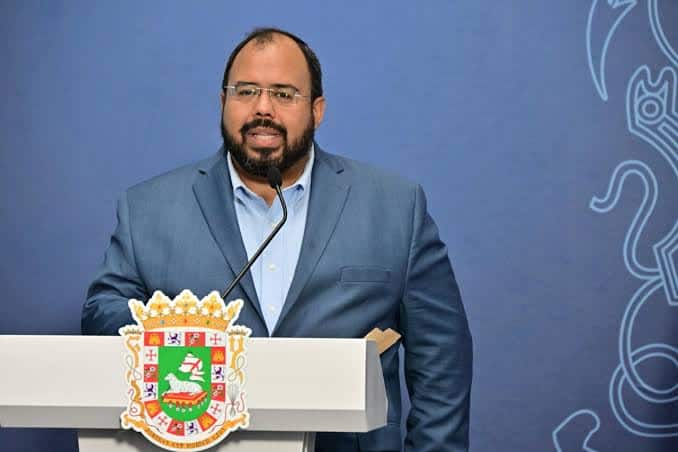
The federal fiscal monitor that has overseen the Education Department's (DE) funds since 2019 is not leaving yet. Secretary Eliezer Ramos Parés confirmed that the fiduciary agent will stay three more months and that its final exit will come in February 2027, as announced on November 10 1. The news comes just as the monitor was expected to cease functions on November 20 2.
What happened
The agreement between the U.S. Department of Education (USDE) and Puerto Rico's DE sets an "orderly, phased" exit for the monitor, who will remain in a technical-assistance role with functions reduced in stages 1. Ramos Parés attributed the extension to the transition to the new enterprise resource planning (ERP) system 1. He added that the USDE recognized that the DE met all transition criteria, and that the main requirement, a functioning Compliance Office, has been operating for months 1.
The secretary described the exit as unprecedented and said the DE completed 100% of the Comprehensive Corrective Action Plan (CCAP) 1.
Background
In 2019, the USDE imposed "specific conditions" on Puerto Rico, including hiring an external third-party fiduciary agent (TPFA), over mismanagement of funds and weak internal controls 2. The measure became public after the arrest of former Secretary Julia Keleher and several contractors over an alleged fraud scheme 2. Alvarez & Marsal has held the position since 2021 2.
In March 2026, Governor Jenniffer González Colón announced the route to end the receivership. At that point the DE had completed 99% of the CCAP, which covers payroll, human resources, procurement, contracting and federal grant management 3. The governor estimated the exit would save about $32 million a year and that the monitor had already cost taxpayers over $150 million 3. Those figures come from the government and were not independently verified.
The numbers
- Extension: three additional months, with exit in February 2027 1.
- Savings: the agreement reduces the contract's amount and price, saving more than $1.3 million a month during the extension 1.
- Original date: November 20, 2026, according to Sen. Carmelo Ríos, chair of the Senate Federal Relations Committee 2.
- Cost cited by the senator: the extension would cost $4 million, a figure that differs from the monthly savings announced by the DE and has not been clarified 2.
- Time in office: the monitor will have served two and a half years in the current administration when it leaves 1.
Sen. Ríos tied the delay to problems with the new financial platform Íntegra PR, which went live in summer 2026 2. Ramos Parés himself has acknowledged that ERP failures delayed payments to school transportation and Special Education providers 2.
What it means for you
If you are a teacher, a vendor, or a parent of a student with Special Education or school transportation services, the monitor does not change what you see in the classroom, but it does affect how quickly invoices are paid and federal funds are released. The monitor's exit is a signal that the USDE trusts the DE's internal controls. Meanwhile, the ERP problems are the part most likely to touch you directly: late vendor payments can affect bus routes and therapies 2.
For taxpayers, the extension at a cheaper contract lowers the daily cost of oversight 1, although Sen. Ríos questions the total cost 2.
How to / Checklist
- If you are a school transportation or Special Education provider with overdue payments, document each invoice (number, date, amount) and submit it in writing to the DE finance office.
- Keep confirmation of receipt for your invoices; you will need it if you file a claim.
- If you are a parent and notice interruptions in your child's transportation or therapies, report it in writing to the school principal and your educational region.
- Keep copies of all communications with the DE about your child's services.
- To follow the process, check the DE's official releases at de.pr.gov and Senate hearings.
- Mark February 2027 as the month the receivership is expected to end.
What's next
The next key date is February 2027, when the DE is expected to fully assume the fiduciary functions 1. Until then, the monitor will keep scaling back its role in stages. The Senate has followed the issue with public hearings on the ERP, and Deloitte, which implements the project, was summoned again 2. The DE did not comment to El Nuevo Día on the delay 2. What remains unclear is the gap between the monthly savings the DE reports and the $4 million cost the senator cites.
Sources
- Metro Puerto Rico, "Educación confirma que seguirá bajo síndico federal hasta febrero", November 10, 2026: https://www.metro.pr/noticias/2026/11/10/educacion-confirma-que-seguira-bajo-sindico-federal-hasta-febrero/
- El Nuevo Día, "Atrasan la salida del síndico que supervisa manejo de fondos federales del Departamento de Educación", November 9, 2026: https://www.elnuevodia.com/noticias/legislatura/notas/atrasan-la-salida-del-sindico-que-supervisa-manejo-de-fondos-federales-del-departamento-de-educacion-a-que-se-debe/
- Metro Puerto Rico, "Anuncian ruta para eliminar el síndico federal que supervisa Educación en Puerto Rico", March 8, 2026: https://www.metro.pr/noticias/2026/03/08/anuncian-ruta-para-eliminar-el-sindico-federal-que-supervisa-educacion-en-puerto-rico/
Sources
CoquiList summary and local context. Read the linked sources for the original reporting.
Ask about this story
Ask anything about this article — in English or Spanish.
Log in to ask about this story.
Comments (0)
Log in to join the conversation.
No comments yet — be the first.