Builders push Washington to raise the income caps blocking federal housing help in Puerto Rico
CoquiList · With information from Metro Puerto Rico

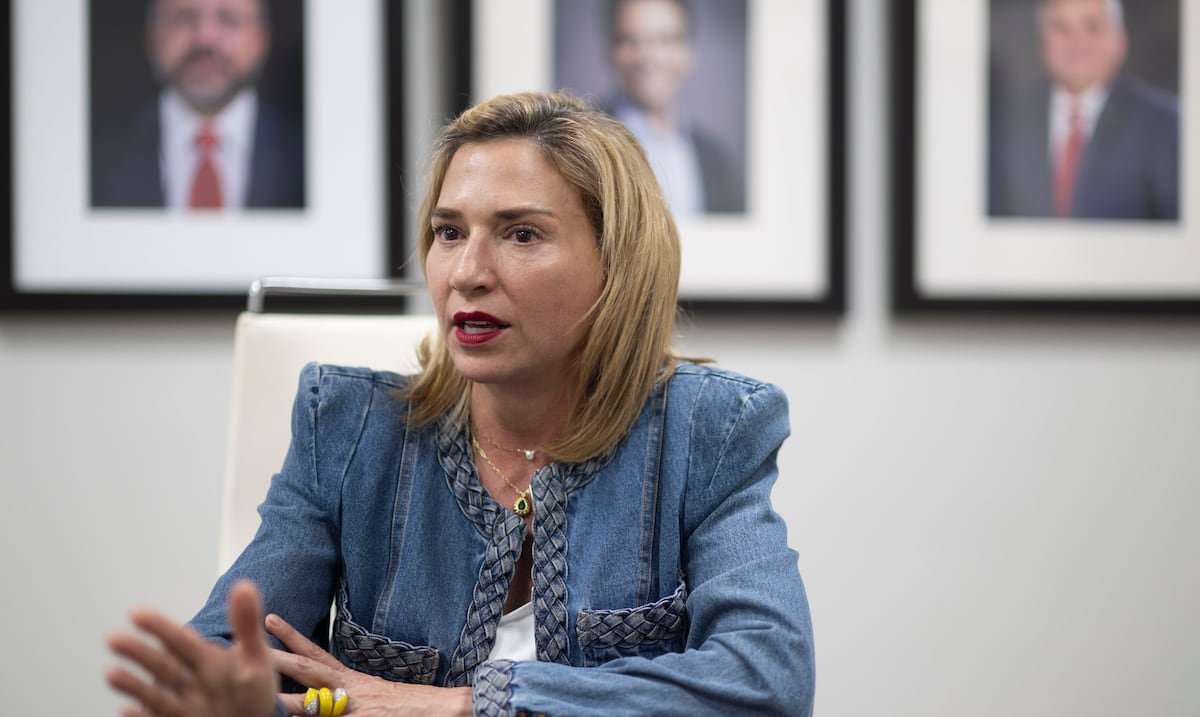
The Association of Constructors of Puerto Rico (ACPR) is asking Congress to fix a federal formula that, the group says, locks thousands of Puerto Rican families out of the very housing assistance the U.S. government designed to help them 1. ACPR president Pinsy Rivera Ortiz put it plainly in remarks to Metro Puerto Rico on August 13: people can technically buy a house, but end up living far from their jobs because what fits their budget isn't located where the jobs are. "You can buy a house, but you have to drive two hours to Juana Díaz and you work in San Juan. That doesn't sit right with me," Rivera Ortiz said 1.
The problem isn't new, but it's back in the headlines this week because Congress just moved two major pieces of the federal housing puzzle almost simultaneously. On July 11, the 21st Century ROAD to Housing Act (Public Law 119-101) was signed into law, passed 85-5 in the Senate and 358-32 in the House. It lets jurisdictions use up to 20% of their CDBG funds for affordable housing construction and creates a pilot program, between 2027 and 2031, to convert vacant buildings into homes 2. But that law doesn't touch the other obstacle weighing most heavily on Puerto Rico: how "extremely low income" is defined under the U.S. Housing Act of 1937, the law governing nearly every HUD program 1.
That's the heart of the complaint. In the states, that threshold is calculated as 30% of area median income (AMI) or the federal poverty level, whichever is higher. In Puerto Rico, it's calculated solely as 30% of AMI, with no federal poverty floor 1. Because the island's median incomes are lower than in most states, that 30% lands at a lower dollar figure — shutting out families who, earning the same real wage in a state, would qualify 1.
The numbers behind the complaint
The National Low Income Housing Coalition's Out of Reach 2026 report calculates that in Puerto Rico you need to earn $11.57 an hour to afford a fair-market two-bedroom apartment without spending more than 30% of income on rent — nearly 30% above the $10.50 minimum wage 3. At that minimum wage, it takes 44 hours a week to cover the average two-bedroom rent of $602 a month; for a one-bedroom at $519, it takes 38 hours 3. The median renter household income on the island is just $17,934 a year — almost exactly the 50% AMI cutoff ($18,548) — and 28% of renter households, about 112,916, live below 30% of AMI, meaning less than $11,129 a year 3.
Congress already has a bill filed to fix this: the Puerto Rico Low-Income Housing Support Act (H.R. 1696), from Resident Commissioner Pablo José Hernández alongside New York Democratic Rep. Ritchie Torres, which seeks to amend the 1937 law so Puerto Rico uses the same income formula as the states. It has sat referred to the House Financial Services Committee since 2025 without moving to a vote 1.
What this means for you
If you've tried to qualify for Section 8, public housing, or any HUD program and were told you "earn too much" even though your paycheck doesn't stretch far enough, this is the mechanism that explains it. Puerto Rico's formula doesn't measure your real cost of living — it measures a percentage of a median income that's already low compared to the states. That pushes families to buy or rent far from where they work, as Rivera Ortiz described, because the only thing that fits the approved budget sits in towns far from job centers.
How to act / Checklist
- Check your current eligibility for Housing Finance Authority (AFV) programs at afv.pr.gov, including Pronto Pa' Tu Casa and Vivienda Joven.
- If you're seeking public housing or Section 8, contact the Public Housing Administration (AVP) at avp.pr.gov to confirm whether your income qualifies under Puerto Rico's local 30% AMI threshold.
- If you're a builder, developer, or community leader, join the Asociación de Constructores de Puerto Rico (acpr.info), which is organizing a federal affairs committee to lobby in Washington.
- Track the status of H.R. 1696 at congress.gov and reach out to the Resident Commissioner's office if you want to back the bill.
- Ask your municipality about the new CDBG funds under the ROAD to Housing Act, since up to 20% can now go toward affordable housing construction.
What's next
ACPR said its next step is to lobby directly during the ROAD to Housing Act's rulemaking phase, when HUD has to write the specific rules for the new programs — that's where Puerto Rico can push to fix the income formula, or at least ensure the new vacant-building conversion funds account for the island's real cost of living. Meanwhile, H.R. 1696 remains stalled in committee, so the deeper fix depends on Congress moving it before this legislative session ends.
Sources
CoquiList summary and local context. Read the linked sources for the original reporting.
Ask about this story
Ask anything about this article — in English or Spanish.
Log in to ask about this story.
Comments (0)
Log in to join the conversation.
No comments yet — be the first.