Nearly 3 in 10 UPR Rio Piedras Students Face Housing Insecurity, First Study of Its Kind Reveals
CoquiList · With information from NotiCel
A groundbreaking study by three research centers at the University of Puerto Rico's Rio Piedras campus (UPRRP) found that 30 percent of students faced housing insecurity in the last 30 days, and 9 percent have experienced homelessness at some point during their time in college 1. It is the first time a rigorous, validated instrument has been used to document the scope of this problem among the campus's undergraduate and graduate student body 1.
The research was led by Dr. David Perez Jimenez, director of the Instituto de Investigaciones Psicologicas; Dr. Yamil Ortiz Ortiz, associate researcher at the Centro de Investigaciones Sociales; and Dr. Yarimar Rosa Rodriguez, director of the Centro de Investigaciones Educativas 1. The team used the Guide to Assessing Basic Needs Insecurity in Higher Education, developed by researcher Sara Goldrick-Rab and used at hundreds of universities across the United States, but never before applied with academic rigor in Puerto Rico 1. As the researchers themselves put it, "in Puerto Rico we have not found studies with rigorous procedures that explore the needs experienced by the university student community" 1.
The survey was conducted during the second semester of the 2022-2023 academic year, with the strongest participation from the Faculty of Social Sciences and the Faculty of Education 1. The questionnaire reached a sample of 1,210 students out of 10,857 enrolled that semester, using a non-probability quota sampling method 1.
The numbers
- 9 percent of respondents reported having experienced homelessness at some point 1.
- 30 percent faced housing insecurity in the last 30 days, meaning difficulty paying rent, a mortgage, or basic utilities, or situations involving overcrowding and forced eviction 1.
- 30 percent said they have difficulty getting to campus 1.
- 72.4 percent rely on a personal or family vehicle to get to the university 1.
- 36 percent spend between 31 minutes and an hour commuting to campus, and an additional 15 percent spend more than an hour 1.
- Researchers cited the closing of student housing near the campus and rising cost of living as factors that, in their words, "have forced many students to drop out of the university" 1.
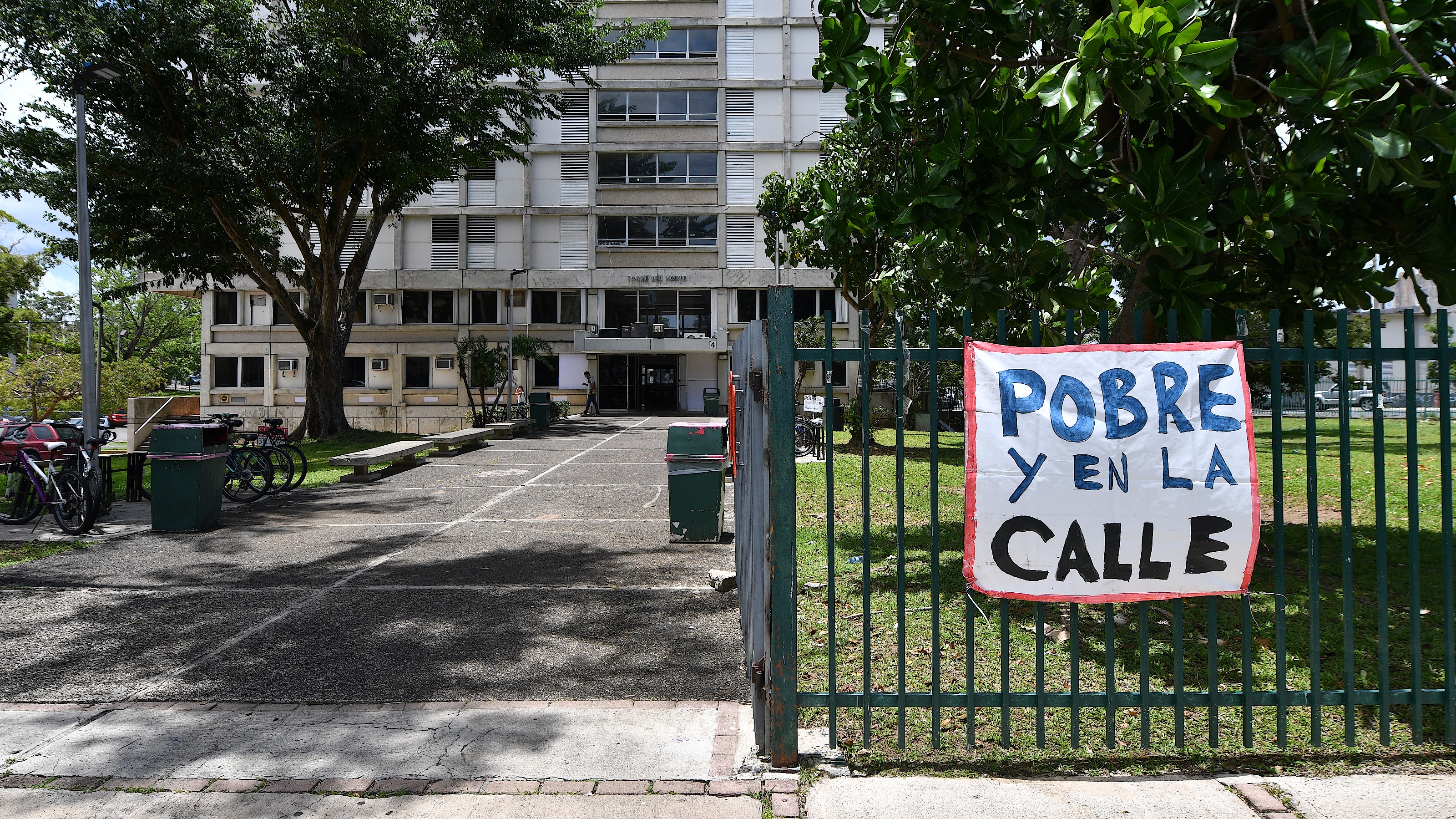
Among the report's recommendations are expediting the rehabilitation of residential facilities such as ResiCampus in the former Torre Norte, coordinating with the Puerto Rico Department of Housing for access to Section 8 (Housing Choice Vouchers), applying for federal HUD funding through the HOME and ESG programs, establishing transportation agreements with the Integrated Transportation Authority (ATI), and developing subsidies for students who depend on personal vehicles 1. ResiCampus, a historic dormitory designed by architect Henry Klumb, is undergoing a $20.4 million rehabilitation funded by FEMA, CDBG-DR, and the federal Department of Education, with a projected capacity of about 233 students 2.
What this means for you
If you are a UPR student, or have a family member who is one, this study puts numbers to a reality many live through in silence: not being able to pay rent, moving from place to place, or spending hours commuting because there is nowhere to live near campus. You are not alone, and there is now official data backing up a request for help. The findings could also push UPR and federal agencies to prioritize student housing funding, something that until now depended on individual efforts.
How to do it / Checklist
- If you are struggling to pay rent or utilities, visit the Dean of Students Office in your college and ask about the Centro de Investigaciones Sociales or Instituto de Investigaciones Psicologicas for guidance related to the study and available resources 1.
- Check whether you qualify for a Section 8 Housing Choice Voucher through the Puerto Rico Department of Housing; the federal program covers part of the rent in the private market 3.
- Ask the Dean of Students Office about the current status of ResiCampus and other university housing available this semester 2.
- If you rely on public transit, check Integrated Transportation Authority (ATI) routes that connect to the Tren Urbano or stops near the Rio Piedras campus.
- If the university opens a confidential intake process stemming from this study, report your situation so you are counted in future funding efforts.
- Share the link to the full report, titled "Estudio necesidades del estudiante subgraduado y graduado de la UPR," with classmates who may be going through the same thing without knowing documented support exists 1.
What's next
The researchers recommend that university administration and the central government use these findings to request federal housing funds under HUD's HOME and ESG programs, and to accelerate stalled student housing projects like ResiCampus 12. The report also calls for repeating the study periodically to measure whether interventions are reducing housing insecurity among the roughly 10,857 students enrolled on the campus 1. As of now, no official date has been announced for a second measurement, nor has university administration announced a formal action plan in response to the report.
CoquiList summary and local context. Read the linked sources for the original reporting.
Ask about this story
Ask anything about this article — in English or Spanish.
Log in to ask about this story.
Comments (0)
Log in to join the conversation.
No comments yet — be the first.