Senator Proposes Recognizing Extreme Heat as an Official Cause of Death in Puerto Rico
CoquiList · With information from Metro Puerto Rico
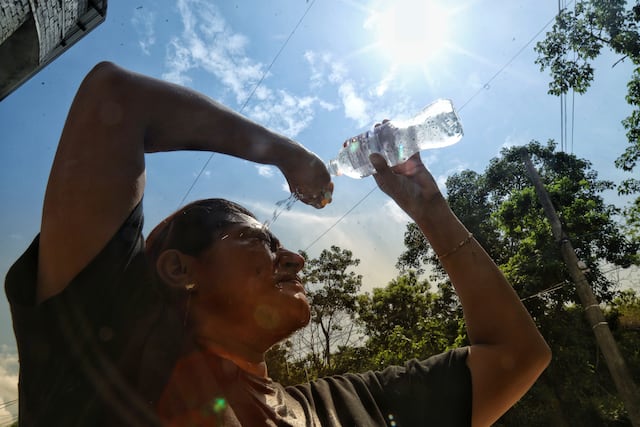
On Monday, August 10, Senator Ada Alvarez Conde filed a resolution that sounds technical but could change how the island understands one of its most underestimated public health threats: allowing extreme heat to be formally listed as a cause of death on Puerto Rico's death certificates.
The measure doesn't create a new benefit or agency. It does something more basic: it asks the government to be able to count, with real numbers, how many people die because of heat. "To address a crisis, we first need to be able to identify and measure it. If a person dies as a result of extreme heat, our government must have the capacity to recognize it," the senator said 1.
The proposal addresses a problem well known among epidemiologists: heat rarely appears as a direct cause on a death certificate. An elderly person with heart conditions who dies during an extreme heat wave is usually recorded as dying from "heart failure" or "cardiorespiratory arrest," with no mention of heat as the triggering factor. The result is that, officially, Puerto Rico does not know how many people lose their lives to heat each summer.
Alvarez Conde was emphatic that this is not a cosmetic issue. "This is a matter of public health, occupational safety, and protection for our most vulnerable populations. We cannot wait to count the deaths before reacting," she said 1.
The resolution doesn't arrive in isolation. Alvarez Conde recalled that in May 2025 she had already introduced a measure asking the Department of Education to develop an air-conditioning plan for public school campuses.
The senator also pointed to an overdue legal obligation: Puerto Rico's Climate Mitigation, Adaptation and Resilience Plan, which the law requires but has not yet been completed. "Many of the recommendations we need have already been studied. What's missing is turning them into action," she said 1.
What it means for you
If you have an elderly relative, work outdoors, or live without adequate air conditioning, this resolution affects you more than it might seem. Right now, if someone in your family dies during a heat wave with an underlying health condition, that death is very unlikely to be officially counted as heat-related. That means the government is making decisions with incomplete data.
For vulnerable communities — the metro area with its urban heat-island effect, southern agricultural zones, and elder-care residences without climate control — this measure could translate into better information for directing resources.
How to act / Checklist
- If you have family members over 65 or with heart, respiratory, or diabetes conditions, ensure they have access to air-conditioned spaces during peak heat (11 a.m. to 4 p.m.).
- If you work outdoors, insist on hydration and shade breaks; document any dizziness, cramps, or confusion.
- Check whether your school or your children's school has working air conditioning.
- If you suspect a relative's death was heat-related, ask the physician to explicitly document it on the death certificate.
- Track the resolution's progress through the Legislative Assembly.
What's next
The resolution moves through the ordinary legislative process: committee referral, possible public hearings, and eventually a report with recommendations. As a resolution (not a binding bill), its real impact depends on whether agencies like the Department of Health or the Institute of Forensic Sciences voluntarily adopt the change. It also adds pressure to complete the Climate Mitigation, Adaptation and Resilience Plan, a document that has been pending despite being a legal requirement 1.
Sources 1 Metro Puerto Rico — "Proponen que el calor extremo quede consignado como causal de muerte" — August 10, 2026
Sources
CoquiList summary and local context. Read the linked sources for the original reporting.
Ask about this story
Ask anything about this article — in English or Spanish.
Log in to ask about this story.
Comments (0)
Log in to join the conversation.
No comments yet — be the first.