RUM Preps Second Space Mission: Up to 40 Million Stem Cells Headed to Space Station in 2027
CoquiList · With information from Recinto Universitario de Mayagüez (UPR)
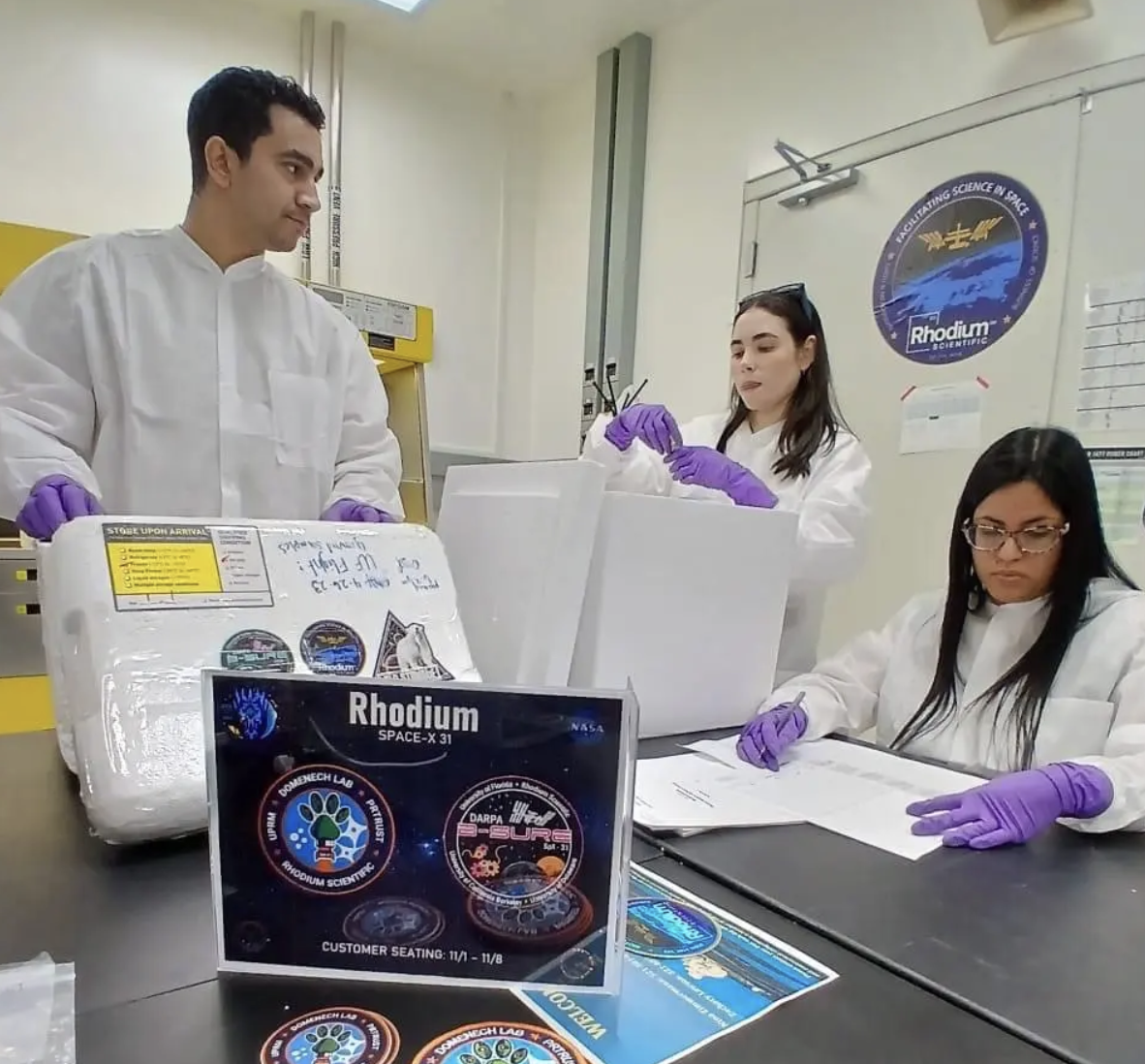
The University of Puerto Rico's Mayagüez Campus (RUM) confirmed this week that it is preparing a second research mission to the International Space Station (ISS), planning to send between 30 and 40 million mesenchymal stem cells during a launch window projected for April through June 2027 12. The news comes after the first space mission by a Puerto Rican university — led by chemical engineering professor Maribella Domenech García — produced a patent application, two peer-reviewed scientific publications, and a new grant of roughly $500,000 from the National Science Foundation (NSF) 1.
The project began on November 4, 2024, when 120 vials containing mesenchymal stem cells attached to microcarriers developed at RUM launched from NASA's Kennedy Space Center aboard the SpaceX CRS-31 resupply mission, backed by the NSF's Engineering Research Center for Cell Manufacturing Technologies (CMaT), a 2024 Advanced Research Grant from Puerto Rico's Science, Technology and Research Trust Fund, and private partner Rhodium Scientific 3. The goal was to solve one of cell manufacturing's toughest challenges: how to preserve, transport, and recover living cells after exposing them to microgravity, without additional cryoprotectants 1.
Months after the samples returned to Earth, the RUM team thawed the tubes and confirmed the cells survived the entire freeze, microgravity-culture, and thaw cycle, validating the technology developed at the campus 1. That result led to a patent application to protect the method and two publications: one on the method in Stem Cell Research & Therapy and another on validating cell recovery in Nature Microgravity, considered the world's most prestigious publication for space-related studies 1. The proposal for the second mission was selected through a competitive NSF call for high-impact research aboard the ISS, Domenech García confirmed to Foro Colegial 1.
What This Means for You
Though it may sound distant, this research carries direct economic and educational weight for Puerto Rico. First, it positions RUM — not a mainland U.S. university — as a leader in an emerging field, space biotechnology, drawing additional federal grants to the island at a time when other university funding sources are under pressure 1. Second, the 2027 second mission will study whether microgravity can enhance stem cells' therapeutic properties — anti-inflammatory activity and tissue regeneration — which could speed up cell therapies that may someday reach hospitals on the island 12. Third, and perhaps most immediate, the project trains Puerto Rican students in cutting-edge cell manufacturing techniques, a skill set with little local educational offering today that opens doors to graduate study and biotech jobs 1.
How to Get Involved / Checklist
If you're a student, a student's family member, or simply want to follow this research from Puerto Rico, here's how:
- If you study or plan to study Chemical Engineering at RUM, ask the Chemical Engineering Department about undergraduate research opportunities in Dr. Domenech García's lab; the project recruits students as active team members, not just observers 1.
- Check RUM's news portal (uprm.edu/portada) and the campus Research section for updates on the April-to-June 2027 launch window and future NSF calls 1.
- If you're interested in space or biomedical science, look up the publications authored by Domenech García in Stem Cell Research & Therapy and Nature Microgravity to understand the validated method 1.
- High school science teachers can use this story as a case study of Puerto Rican STEM achievement to motivate students to consider careers in engineering and biomedical research.
- Follow coverage from El Nuevo Día and other local outlets on the second mission, which is expected to generate more detail as the 2027 launch date approaches 2.
What's Next
The RUM team now enters the technical preparation phase for the second mission: defining culture, packaging, and transport protocols for the 30 to 40 million mesenchymal stem cells that will travel to the ISS between April and June 2027 1. The patent application remains under review, a process Domenech García says can take several years before confirming whether the technology is genuinely novel 1. Meanwhile, the researcher said the second study will focus on understanding, at the molecular level, what changes stem cells undergo when exposed to microgravity and how those changes might be used to enhance tissue-regeneration and anti-inflammatory therapies 12.
Sources
1 Recinto Universitario de Mayagüez, "Investigación espacial del RUM impulsa publicaciones científicas, una solicitud de patente y una nueva misión financiada por NSF," September 11, 2026. https://www.uprm.edu/portada/2026/09/11/nuevamisionespacial/ 2 El Nuevo Día, "Nueva misión de investigadores boricuas enviará células madre al espacio para potenciar su capacidad regenerativa," Génesis Ibarra Vázquez, September 6, 2026. https://www.elnuevodia.com/ciencia-ambiente/otros/notas/investigadores-de-puerto-rico-enviaran-celulas-madre-al-espacio-para-estudiar-su-potencial-regenerativo/ 3 Recinto Universitario de Mayagüez, "El RUM marca un hito científico al enviar investigación al espacio," November 7, 2024. https://www.uprm.edu/portada/2024/11/07/rumenviainvestigacionalespacio/
Sources
CoquiList summary and local context. Read the linked sources for the original reporting.
Ask about this story
Ask anything about this article — in English or Spanish.
Log in to ask about this story.
Comments (0)
Log in to join the conversation.
No comments yet — be the first.