Over 1,000 First Graders Failed to Advance: Education Department Acknowledges the Challenge
CoquiList · With information from Metro Puerto Rico
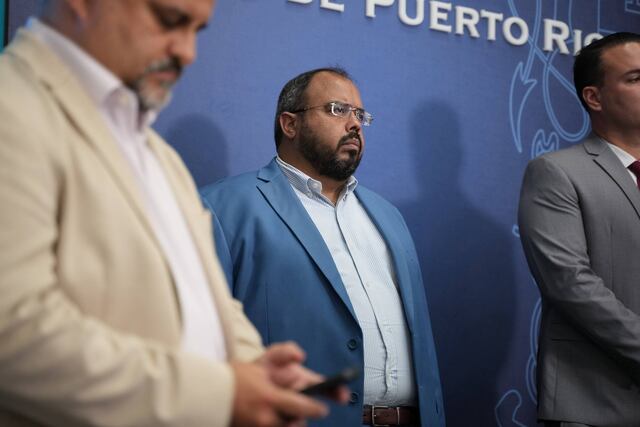
Education Secretary Eliezer Ramos Parés acknowledged that 1,088 first-grade students failed to advance to the next level during the school semester that just ended. The figure is part of a broader picture: in total, 2,950 students from first through fifth grade and 3,380 from sixth through twelfth grade were retained, meaning more than 6,300 children will have to repeat their grade in the public system 1.
Ramos Parés said the data "needs close examination" and noted his team had already been discussing necessary adjustments to first-grade preparation before the numbers went public. The secretary identified family involvement as "one of the system's main challenges" and said that getting parents to prioritize academic achievement and maintain communication with teachers remains an ongoing task 1.
The numbers arrive at a difficult time for the island's education system. The 2026-2027 semester began on August 6 with 225,595 students spread across roughly 850 public schools, but under the shadow of a $1.2 billion budget cut that has reduced security and maintenance staff 2. On top of that, water rationing in at least seven municipalities forced the Department to activate preventive measures for responsible water use and strengthen protocols in school cafeterias 3. The Department itself acquired 200 water cisterns to guarantee supply at affected campuses 2.
For first graders, who are between six and seven years old, retention can mark a turning point. Early education research shows that repeating a grade at such a young age can affect self-esteem and long-term motivation if not accompanied by adequate academic and emotional interventions. Ramos Parés mentioned that Education will review kindergarten programs, available teacher resources, and curriculum to identify the gaps that led so many students to fall short of minimum standards 1.
What This Means for You
If you have a child in the public system, especially in the elementary grades, these numbers are a warning sign. It is not just about the Department "doing its job"; the data confirms that support at home weighs as much as what happens in the classroom. For the families of the 1,088 retained students, the next semester is a second chance, but only if there is a concrete plan. And for teachers already dealing with full classrooms and limited resources after the $1.2 billion cuts, the pressure increases with no guarantee of reinforcement 2.
Context matters too: schools started the semester dealing with water rationing, electrical problems with LUMA, and fewer support staff. When a six-year-old does not learn to read at the expected pace, the causes are rarely just academic. There may be instability at home, a lack of materials, or simply a classroom where the teacher is handling too many students without an aide.
How to Take Action / Checklist
-
Review your child's progress report. If you received notification that they were retained, request a meeting with the teacher to understand exactly which areas need reinforcement, whether reading, writing, or math.
-
Establish a study routine at home. Dedicate at least 20 minutes daily to guided reading or educational activities. It does not have to be formal; reading stories together counts.
-
Use the DE's free resources. The E-Data platform and the Conoce tu Escuela portal (available at de.pr.gov) let you see performance data by school. Check how your child's campus compares to others.
-
Connect with the teacher regularly. Do not wait for the next parent meeting. A message or call every two weeks to ask about progress makes a difference.
-
Look for tutoring or extracurricular programs. Many municipalities and nonprofits offer free academic reinforcement. Ask at your school or your town's municipal office.
-
Take care of emotional well-being. A child who repeats a grade may feel shame or frustration. Talk with your child about how they feel and reinforce that repeating is not failure but a chance to learn better.
What Comes Next
The Department of Education has not announced a specific plan to address retained students, but Ramos Parés indicated that kindergarten programs and teaching resources will be reviewed to close the identified gaps 1. With the semester already underway and the budget slashed, the real capacity for intervention will depend on how many new resources are allocated and whether schools receive additional specialized staff.
It also remains to be seen whether the Department will release data broken down by region, school, or municipality, which would allow communities to identify where problems are concentrated. For now, the 6,330 students retained across the entire system are a reminder that standardized tests and budget cuts do not tell the whole story: behind every number is a child who needs someone, at school and at home, to bet on them.
Sources 1 Metro Puerto Rico, "Secretario de Educación reconoce trabajo por hacer con sobre mil estudiantes de primero que no pasaron de grado," August 11, 2026. 2 El Vocero, "Inicia semestre escolar en 850 escuelas con retos por racionamiento y recortes presupuestarios," August 6, 2026. 3 WIPR, "Educación activa medidas preventivas para el uso responsable del agua y refuerza protocolos en comedores escolares," August 10, 2026.
Sources
CoquiList summary and local context. Read the linked sources for the original reporting.
Ask about this story
Ask anything about this article — in English or Spanish.
Log in to ask about this story.
Comments (0)
Log in to join the conversation.
No comments yet — be the first.