Fiscal Board Approves Extending Puerto Rico's Financial Emergency Through All of 2026
CoquiList · With information from Metro Puerto Rico
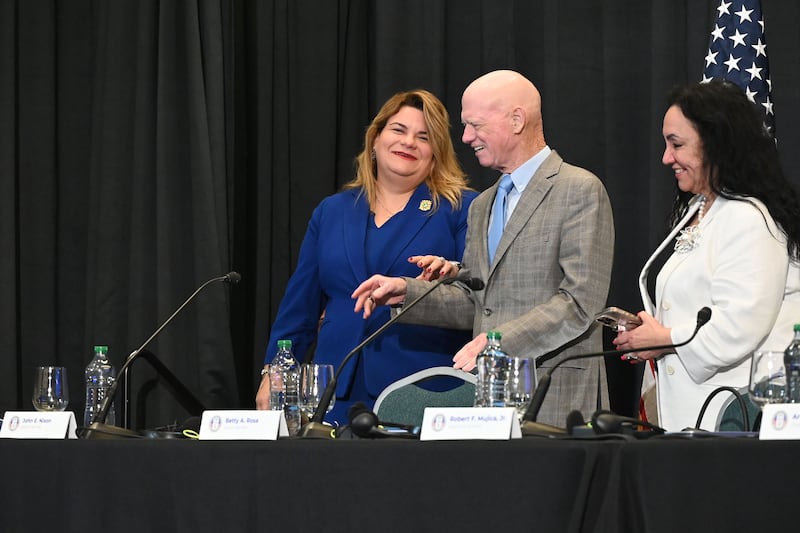
The Financial Oversight and Management Board (FOMB) gave the green light to two executive orders from Governor Jenniffer González Colón that retroactively extend Puerto Rico's fiscal emergency status through all of 2026 1. The approval came in a letter dated August 14 and signed by the Board's executive director, Robert F. Mujica Jr., who confirmed the board reviewed and approved a total of six gubernatorial decrees 1.
Executive Orders 2026-038 and 2026-039 are grounded in Law 5-2017, known as Puerto Rico's Financial Emergency and Fiscal Responsibility Act, passed in 2017 so the central government could meet its obligations without abandoning essential services while it negotiated debt restructuring under PROMESA 2. The original law only authorized an emergency period through May 1, 2017, renewable by the governor in three-month increments via executive order 2. Nearly a decade later, the González Colón administration is still reaching for that same tool to keep in place the extraordinary powers the law grants.
By the numbers: EO 2026-038 retroactively extends the emergency period from January 1 to June 30, 2026, while EO 2026-039 extends it from July 1 to December 31, 2026 1. Both orders retroactively ratify all official actions taken under the emergency umbrella during those six-month stretches 1. The Board reminded La Fortaleza that under PROMESA, every executive order of this kind must be submitted for its review and approval before being issued 13. In the same August 14 letter, the Board approved four other measures: Executive Order 2026-029, which extends temporary government employee appointments through June 30, 2027 and authorizes salary differentials for that staff; a domestic animal sterilization plan designating the Tourism Company as coordinator; a revision of the committee overseeing opioid settlement funds, adding the ASSMCA administrator as vice president; and the "Puerto Rico Embraces Colombia" order, empowering the State Department to coordinate humanitarian, technical, medical, and logistical aid after the August 10 earthquake that struck that country 1. Under Law 5-2017, for as long as the emergency lasts, the governor retains power to designate which services are essential, direct the use of government "lockbox" accounts, approve or deny contracts and hires, remove administrators, and limit bank disbursements 2. The Board, led by Mujica, has kept an active posture this year scrutinizing other executive orders from the governor: weeks earlier it had questioned the use of the Emergency Reserve Fund in three separate decrees covering coastal erosion, water service interruptions, and forest fires 4.
What This Means for You
- Public employees: while the emergency remains active, the government keeps direct control over payroll, hiring, and salary differentials for temporary staff; the appointment extension through June 2027 under EO 2026-029 directly affects thousands of employees in fixed-term positions 1.
- Contractors and suppliers: any new contract with executive-branch agencies remains subject to the review and possible veto power the law grants the governor under the state of emergency 2.
- Pensioners and creditors: the retroactive nature of the orders means decisions already made about payment prioritization during the first half of the year are now formally ratified, closing any legal gap that could have been challenged 1.
- Taxpayers generally: the emergency remains the legal mechanism that lets the central government prioritize essential services -health, safety, education- ahead of certain debt payments, a structure still in place nearly a decade after the bankruptcy filing.
How to Handle It / Checklist
- If you work for the government under a temporary appointment, check with your agency's HR office whether your position is covered by EO 2026-029 and its extension through June 30, 2027.
- If your business contracts with public agencies, confirm that any new contract or renewal goes through AAFAF's approval process and, where applicable, Board review.
- Read the full text of executive orders 2026-038 and 2026-039 on La Fortaleza's portal (fortaleza.pr.gov) before assuming a specific procedure is exempt.
- Follow the Board's letters and statements at oversightboard.pr.gov to anticipate which other executive orders might face scrutiny in coming months.
- If you're a beneficiary of Department of the Family programs or other agencies with services declared essential, check directly with the agency whether any process was reclassified under the emergency.
What's Next
The underlying question -how much longer a "fiscal emergency" declared nearly a decade ago will formally last- remains unanswered. The Oversight Board, whose mandate under PROMESA continues until Puerto Rico achieves sustained access to capital markets on favorable terms, has given no indication it plans to stop signing off on these six-month extensions. Meanwhile, the González Colón administration will have to submit any new executive order touching public funds, payroll, or contracts for the fiscal body's prior review, a process that has generated friction on other fronts this year, as happened weeks earlier with the orders covering the Emergency Reserve Fund 4. The next extension, if the pattern holds, would need to arrive before the end of 2026 to cover the first half of 2027.
Sources
CoquiList summary and local context. Read the linked sources for the original reporting.
Ask about this story
Ask anything about this article — in English or Spanish.
Log in to ask about this story.
Comments (0)
Log in to join the conversation.
No comments yet — be the first.