Puerto Rican firm wins $100,000 from HHS for AI tool to help Alzheimer's caregivers
CoquiList · With information from Metro Puerto Rico
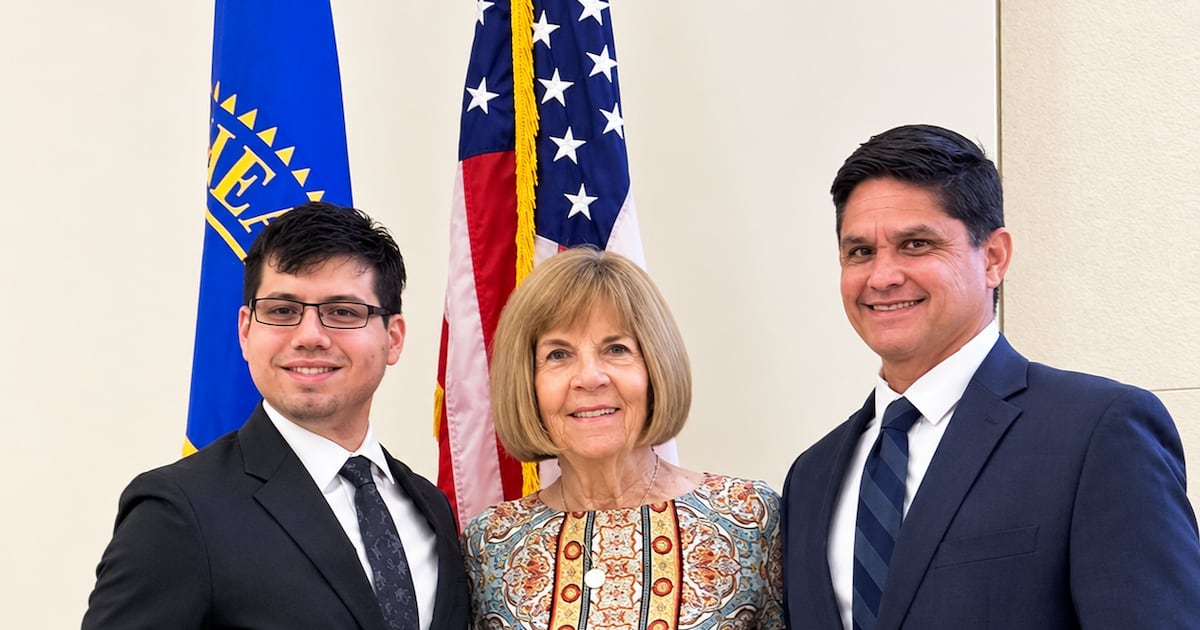
A Puerto Rican company wants the next warning that something is wrong with an Alzheimer's patient to arrive before the crisis, not after it. EC-Safety Technologies was named one of 19 national Phase 1 winners of the Caregiver Artificial Intelligence Prize Challenge, a contest run by the U.S. Department of Health and Human Services (HHS) through the Administration for Community Living (ACL), and will receive a $100,000 grant to keep developing its tool 123.
Background
According to ACL, the competition has three phases and two tracks: one to help people who care for older adults and people with disabilities at home or in the community, and another to make the work of the direct care workforce more efficient 2. The Phase 1 winners were announced on November 18, 2026 2. Metro Puerto Rico reports the contest drew about 650 participants, with the island firm landing among the 19 awardees 3.
The project, called Household Intelligence, falls in the family caregiver track. ACL describes it as a tool built with a community partner in Puerto Rico for relatives of people with Alzheimer's disease and related dementias 1.
How it works
The system pairs simple sensors around the house with an activity watch or wristband. Over time it learns each household's normal routine and, every morning, the caregiver gets a short, plain-language summary of changes worth paying attention to 13. Metro notes the summary can be generated in Spanish or English 3.
Three design choices stand out. First, it uses no cameras or microphones 13. Second, it is built to say "I don't know" instead of guessing when it is uncertain 1. Third, the caregiver stays in charge: they can accept, adjust, postpone or reject each recommendation 13. Aides, family members and clinicians also see only the information they need 1.
According to founder and chief executive G. Antonio Sosa-Pascual, the scientific basis is a study funded by the National Institutes of Health (NIH) 3. The artificial intelligence engine was developed by Fernando Yordan López, an engineer from Ponce and former Google employee 3. In its early days, the project received grants and mentoring from Parallel18, the accelerator of the Puerto Rico Science, Technology and Research Trust 3.
The numbers
- 19 national winners in Phase 1, with $2.25 million in combined prizes 2.
- $100,000 per winner; some received an additional $50,000 for merit 23.
- Seven winners received special recognition for innovations serving people with intellectual and developmental disabilities or dementia 2.
- About 650 contest participants, according to Metro 3.
- 2,993 Alzheimer's deaths in Puerto Rico in 2024, per preliminary Demographic Registry figures, the same as diabetes mellitus 4.
- 10.6% of Medicare beneficiaries on the island were classified in 2020 as highly probable dementia cases, the highest rate among U.S. jurisdictions, versus 8.2% in Florida and 8.1% in Texas 4.
- Around 5,000 older adults with dementia are subsidized by the Department of the Family in licensed homes, and more than 3,000 are served through its homemaker program 4.
What it means for you
If you care for a relative with Alzheimer's, this tool is not on the market yet. What the company won was a grant to finish the app and test it; no price or sale date has been announced 3. Still, the news matters for two reasons.
The first is the profile of the Puerto Rican caregiver. Demographer Norberto Santana projects Alzheimer's will become the island's third leading cause of death once data is finalized, and professor José Carrión Baralt estimates about 90% of caregivers are women, many of whom have had to leave their jobs to care for their patient full time 4. A tool that flags changes in routine could ease the constant watchfulness.
The second is that testing will include families in Puerto Rico, opening the door for island households to take part 3.
How to / Checklist
- If you want to take part in testing, contact the Organización Pro de la Atención a la Persona con Alzheimer (OPAPA), the project's community partner, and ask how to enroll your family when testing opens 3.
- In the meantime, review the tools for caring for a person with Alzheimer's that the Department of Health publishes at salud.pr.gov/CMS/511 5.
- Keep a simple daily log (sleep, meals, medications, episodes of confusion or agitation) so you can compare changes in routine and bring it to the doctor.
- Learn about the Department of the Family's homemaker program and licensed-home subsidy if you need part-time or full-time support 4.
- Check the full winners list at acl.gov/caregiver-ai-challenge/winners to see other awarded tools 1.
- Do not share your relative's health data with apps that do not explain what sensors they use; the awarded design stands out for using no cameras or microphones 1.
What's next
Phase 1 winners advance automatically to Phase 2, focused on implementation and testing: refining evaluation plans, trying the tools in real-world settings, measuring effectiveness and improving them with feedback 2. ACL's announcement does not list deadlines for that phase 2. EC-Safety says it will finish the app and test it with families in Puerto Rico and other states alongside OPAPA 3.
Sources
CoquiList summary and local context. Read the linked sources for the original reporting.
Ask about this story
Ask anything about this article — in English or Spanish.
Log in to ask about this story.
Comments (0)
Log in to join the conversation.
No comments yet — be the first.