Manufacturing Employment Hits Historic Lows Even as Investment Tops $4 Billion
CoquiList · With information from El Nuevo Día
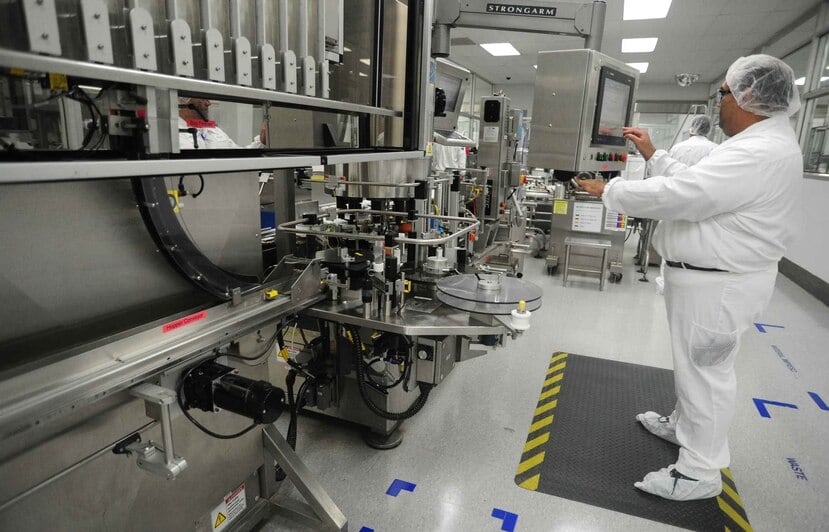
Manufacturing in Puerto Rico faces a paradox that defines the island's employment future: while billions in investment flow in and companies announce expansions, direct jobs keep falling to levels not seen in decades 1.
According to data from the Department of Labor and Human Resources (DTRH), the manufacturing sector employed just 80,300 direct workers as of June 2026 — a 49.3% decline compared to the 158,700 jobs it generated in 1990 1. That amounts to the loss of approximately 78,200 positions in just over three decades.
But the story is not as straightforward as it seems. Manufacturing remains the heaviest engine of the Puerto Rican economy, representing roughly 43% of gross domestic product and generating some 150,000 indirect jobs in support sectors like logistics, maintenance, and professional services 12.
Investment keeps flowing
Over the past 18 months, the Department of Economic Development and Commerce (DDEC) has tallied 25 announcements of company expansions or arrivals with investments exceeding $4 billion and commitments to create approximately 5,000 new jobs 1. DDEC Secretary Carlos Ríos Pierluisi has highlighted these figures as evidence that Puerto Rico remains competitive as an advanced manufacturing destination.
So why do jobs keep declining?
Gabriel Maldonado, former DTRH secretary and member of the Human Capital Committee at the Puerto Rico Manufacturers Association (PRMA), puts it bluntly: "Manufacturing has evolved through time" and now requires "fewer people" to produce the same output thanks to automation and process optimization 1.
Ramón Vega Alejandro, executive director of Puerto Rico Manufacturers Extension (Primex), reinforces that view: "Many companies arrive with modern equipment where the workforce requirement is much lower than 20, 30, or 40 years ago" 1.
The recruitment problem
The irony is that despite employing fewer people, companies cannot find the workers they need. A ManpowerGroup survey revealed a net hiring intention of 78% among manufacturers for the third quarter of 2026 13. The most in-demand positions include manufacturing operators, maintenance technicians, packaging operators, and quality, process, and electrical engineers.
The problem is twofold: average weekly wages in the sector stand at $921.96 — roughly $47,900 per year — but small and medium enterprises cannot match what multinationals pay, making it difficult to compete for the same talent 1.
The government has responded with training programs. Through Registered Apprenticeship Programs and the "Conexión Laboral" initiative, approximately 380 people are currently training for new positions and 350 incumbent workers are receiving retraining 12.
Historical context
The root of the decline traces back to the elimination of Section 936 of the federal Internal Revenue Code, enacted in 1996 and fully phased out in 2006. Those tax incentives made Puerto Rico a haven for pharmaceutical and electronics manufacturing. Without them, many operations moved to countries with cheaper labor 1.
But Maldonado warns that blaming Section 936 alone falls short: automation would have reduced jobs regardless, as it has across the industrialized world.
What it means for you
If you work in manufacturing or are seeking employment in the sector, the outlook is mixed but not hopeless. There is real demand for workers — 78% of companies want to hire — but the profile they seek has changed dramatically. It is no longer about assembly lines with hundreds of operators; today they need specialized technicians who can operate and maintain advanced machinery, and salaries reflect that specialization.
For the island's broader economy, the fact that the sector generates 43% of GDP with half the employees it once had means higher productivity per worker, but also that the benefits are concentrated in fewer hands.
How to act / Checklist
- Explore DTRH training programs like "Conexión Laboral" and Registered Apprenticeship Programs — they are free and place participants with active companies 2.
- Focus on high-demand technical certifications: industrial maintenance, PLC (programmable logic controllers), process engineering, and quality control.
- Check DDEC opportunities at desarrolloeconomico.pr.gov to identify companies expanding or arriving on the island.
- If you are a manufacturing SME, reach out to Primex (prma.com) for technical assistance on modernization and capital access.
- Browse the EmpleosPR portal for sector positions; filter by "manufacturing" and your geographic area.
What comes next
With $4 billion in committed investments and 5,000 jobs in the pipeline, the next two years will be critical in determining whether those numbers materialize. The key will be whether training programs can close the gap between what industry needs and what the workforce offers. Meanwhile, the global trend of more production with fewer employees shows no signs of reversing — and Puerto Rico, far from being the exception, is a case study in that transformation 13.
Sources
1 El Nuevo Día — En niveles mínimos el empleo en la manufactura
2 DTRH — bls.gov/eag/eag.pr.htm
3 ManpowerGroup — Employment Outlook Survey
Sources
CoquiList summary and local context. Read the linked sources for the original reporting.
Ask about this story
Ask anything about this article — in English or Spanish.
Log in to ask about this story.
Comments (0)
Log in to join the conversation.
No comments yet — be the first.