Minimum Wage Stuck at $10.50: House Votes 32-20 to Scrap the Commission That Decides Raises
CoquiList · With information from Metro Puerto Rico
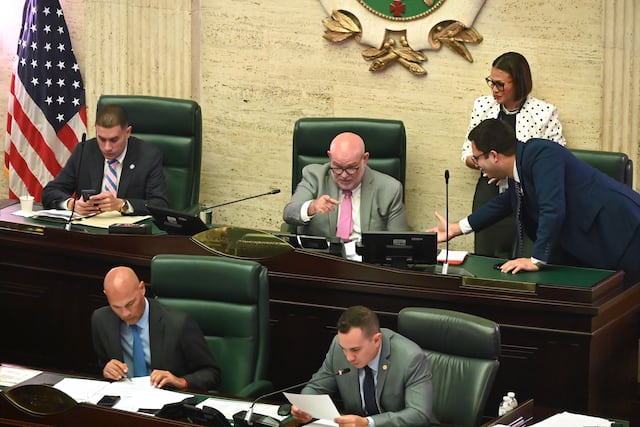
Puerto Rico's minimum wage has been frozen at $10.50 an hour since July 1, 2024, and now the Legislature wants to strip the power to raise it from the very body created to do exactly that. On June 22, 2026, the House of Representatives passed House Bill 1115 by a vote of 32 in favor and 20 against 1. The measure eliminates the Minimum Wage Evaluation Commission and returns to the Legislative Assembly the authority to set how much an hour of work pays on the Island 1. If you are one of the thousands who earn the minimum — in fast food, retail, cleaning, security — this change decides who controls your next raise.
Where the $10.50 comes from
The current minimum comes from Law 47-2021, the "Puerto Rico Minimum Wage Act," which set a stairway of increases: $8.50 an hour on January 1, 2022, $9.50 on July 1, 2023, and $10.50 on July 1, 2024 2. That law also created the Evaluation Commission, attached to the Department of Labor and Human Resources and chaired by the Secretary of Labor, with six additional members: two representing workers, two representing employers, one economist, and one economist expert in labor affairs 2.
The idea was simple: instead of waiting for politicians to agree, a technical body would review the economy each year and could issue mandatory decrees with the force of law to raise wages. The law set limits: decrees must be issued at least every two years, no more than twice in a single year, and no decree may set an increase of more than 25% over the prior wage 2.
What the bill says
HB 1115 does not lower the wage, but it changes who is in charge. The author, Rep. Roberto López Román, argued the measure "does not touch, freeze, or lower the minimum wage" and that it "returns the power to us lawmakers to legislate on minimum wage when it is needed" 1. In place of the Commission, it would create an Advisory Salary Board, also chaired by the Secretary of Labor, that would only issue recommendations to the Legislature — not decrees with the force of law 1. That board would have to deliver a partial report in six months and a final one in a year 1.
Important exceptions the law keeps: agricultural workers, government employees, and those covered by collective bargaining agreements with equal or higher wages are not governed by this minimum, and tipped employees must earn the federal minimum plus tips that reach at least the state minimum 2. The Financial Oversight Board concluded in June that the bill does not affect the Fiscal Plan 3.
What it means for you
- Your hourly pay does not change today: $10.50 remains the legal minimum in most private jobs 2.
- The path to your next raise changes. With the Commission, a technical decree could raise your wage without needing a new law. Without it, any raise would have to pass the House, the Senate, and the governor's signature 1.
- Unions and community groups warn that leaving raises to politics makes them slower and less certain, which is why they are delivering letters to the Senate asking for a no vote 1.
How to do it / Checklist: protect your pay today
- Run the numbers. Multiply your hours by $10.50. If you work 40 hours, your gross weekly pay should be at least $420 before deductions 2.
- Check your paystub. Confirm the hourly rate, hours worked, and that overtime (over 8 a day or 40 a week) is paid at time and a half.
- Keep evidence. Photograph or download every paystub and log your hours on your own calendar in case you need to file a claim.
- If you are paid less than $10.50, talk to your employer first; it may be a payroll error.
- File a complaint with the Labor Standards Bureau of the Department of Labor and Human Resources. Call (787) 754-2119 or go to trabajo.pr.gov to find your nearest regional office.
- Do not sign receipts stating you were paid more than you actually received.
What comes next
HB 1115 moved in mid-July 2026 to the Senate, where it is under committee review 1. If the Senate approves it and the governor signs it, the Evaluation Commission disappears and the Advisory Board starts its six-month and one-year clock for its reports 1. In the meantime, the minimum stays at $10.50. It is worth following the Senate vote: it decides whether your next raise comes from an economic analysis or from a political negotiation at the Capitol.
Sources
CoquiList summary and local context. Read the linked sources for the original reporting.
Ask about this story
Ask anything about this article — in English or Spanish.
Log in to ask about this story.
Comments (0)
Log in to join the conversation.
No comments yet — be the first.