PPD accuses PIP of hiding over $200,000 in anonymous donations, and Dalmau fires back with the law
CoquiList · With information from El Nuevo Dia
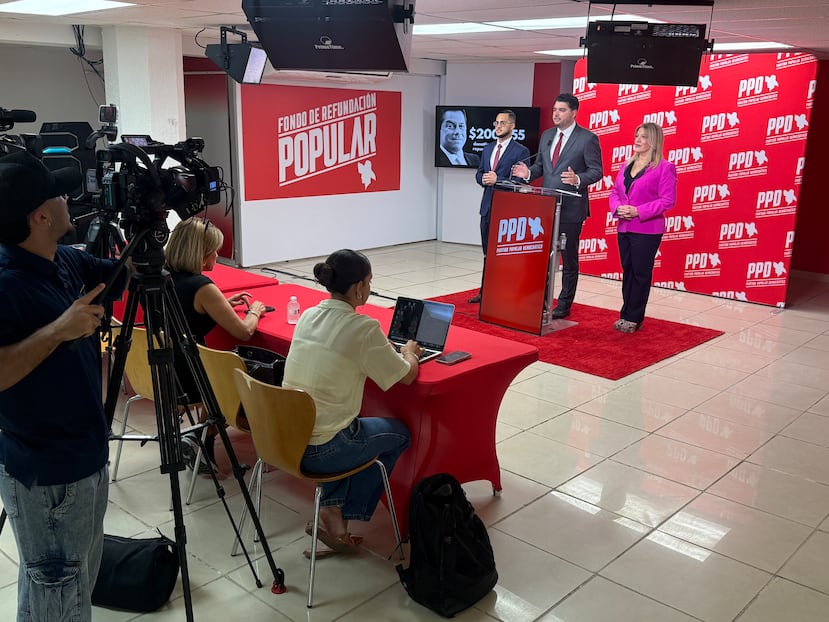
The Popular Democratic Party came out on Tuesday and said what it had reportedly been chewing on privately for months: that the Puerto Rican Independence Party received more than $200,000 in anonymous donations and close to $139,000 in cash during the 2025-2026 cycle, a figure that represents more than half of everything the PIP reported raising 1. The accusation came from Manuel Calderón Cerame, the PPD’s secretary general, at a press conference that also featured Anibelle Sloan, of the Asociación de Mujeres Populares, and Abner Otero, of the Asociación de Abogados Populares 1. Juan Dalmau did not stay quiet and responded the same day, citing the very law that regulates campaign financing 12.
To understand the fight, you have to look at the numbers the PPD says it pulled from the reports the PIP files with the Oficina del Contralor Electoral (OCE), the agency that oversees campaign money under Law 222-2011 2. According to the PPD, of the $497,551.75 the PIP reported in donations, 52.75 percent —about $262,458.54— fell into the cash or anonymous category. Calderón Cerame summed it up this way: "The PIP is the party that has collected the most anonymous money. Where does that money come from. Nobody knows" 1. The PPD compares that to its own numbers: just $1,349 in cash, or 0.11 percent of its funds, and zero anonymous donations reported over the same period 1.
The PIP was not about to let the narrative settle. Its defense was technical: the Law for the Oversight of Political Campaign Financing defines an "anonymous donation" as any contribution of $50 or less, and those contributions —small as they are— get reported the same way, itemized, in the filings sent to the OCE 12. The party estimates those small donations add up to roughly $78,000 a year, far from the $200,000 figure the PPD is citing as if it were hidden money or funds of dubious origin 1. The PIP also took the chance to repeat a demand it has made for years without the Legislature budging an inch: public financing of campaigns, which the party argues would eliminate dependence on private donors, anonymous or otherwise, at the root 1.
This is not happening in a vacuum. Just four days earlier, at the celebration of the Commonwealth’s 74th anniversary in Cayey, Resident Commissioner Pablo José Hernández unveiled four anti-corruption proposals, including limiting or banning donations from government contractors, as well as restricting cash and anonymity in campaign contributions 3. In other words, the PPD itself has been publicly pushing a campaign-finance reform at the very same time it is calling out the PIP for allegedly exploiting the loopholes that same reform is meant to close.
What this means for you
If you vote, if you follow politics closely, or if you simply wonder where the money comes from that funds candidates’ ads and walking tours, this fight touches you directly. Campaign financing is not an abstract legal topic: it determines which interests get a seat at the table after the election. An anonymous donation, by definition, cannot be traced —you do not know if it comes from a contractor, a lobbyist, or a neighbor with $40 to spare. When more than half of a party’s money falls into that category, the transparency the electoral process is supposed to protect gets weaker, regardless of which party it is.
How to do it / Checklist
- Go to the Oficina del Contralor Electoral portal (oce.pr.gov) and look for the section on campaign committee donation reports.
- Filter by the party or candidate you care about and review the breakdown between identified donations, cash, and anonymous contributions.
- Check the report date —parties file this data periodically, so compare cycles to spot trends.
- If you find something that looks out of line —for example, anonymous donations exceeding the $50-per-donor limit— you can file a complaint directly with the OCE.
- Follow the legislative hearings on campaign finance reform; the proposals from Hernández and the PIP’s demand for public funding could move in the coming months.
- Share what you find. These reports are public, but few voters ever look at them —and that is exactly why these fights play out as press-conference accusations instead of getting settled with data anyone can verify.
What’s next
Neither the PPD nor the PIP has announced plans to formally take this to the OCE as a complaint, which suggests that, for now, this stays in the realm of messaging warfare ahead of party reorganization and the coming electoral cycle. But the underlying question —whether Puerto Rico should ban anonymous donations and cash in campaigns, and whether public financing is the answer— is not going away with this story. With the PPD finishing its reorganization in October and several voices within the Legislature already talking about reforming Law 222-2011, this clash between Populares and Independentistas could well be the first round of a bigger debate over who pays for political campaigns on the island.
Sources: 1 El Nuevo Día — https://www.elnuevodia.com/noticias/politica/notas/ppd-cuestiona-recaudos-del-pip-denuncian-mas-de-200000-en-donativos-anonimos/ 2 Oficina del Contralor Electoral de Puerto Rico (OCE) — https://www.oce.pr.gov/ 3 El Nuevo Día — https://www.elnuevodia.com/noticias/politica/notas/miles-llegan-hasta-cayey-para-celebrar-los-74-anos-del-ela-y-apoyar-a-pablo-jose-hernandez/
CoquiList summary and local context. Read the linked sources for the original reporting.
Ask about this story
Ask anything about this article — in English or Spanish.
Log in to ask about this story.
Comments (0)
Log in to join the conversation.
No comments yet — be the first.