Five reservoirs at watch level, rationing with no end in sight: drought tightens its grip on Puerto Rico
CoquiList · With information from El Nuevo Día
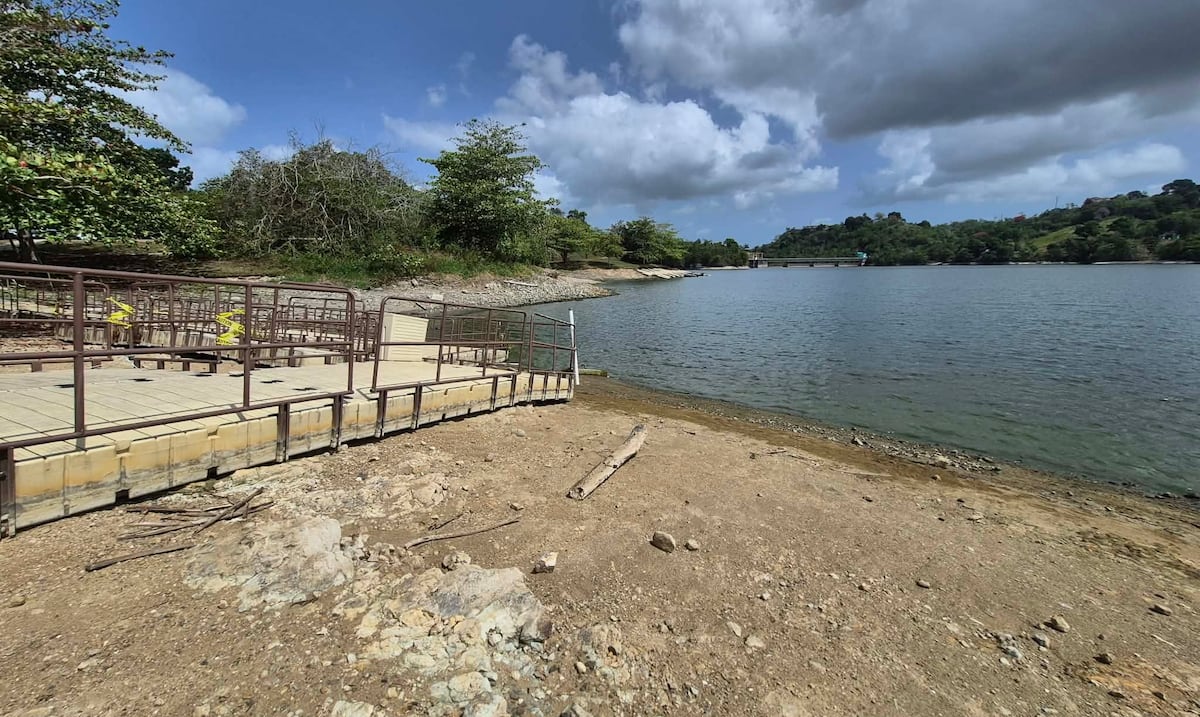
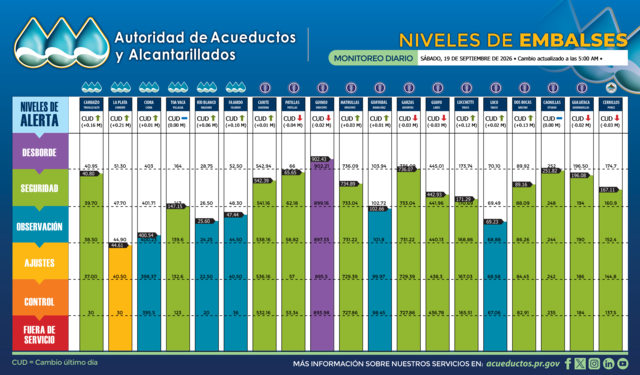
The drought gripping Puerto Rico for weeks intensified this week as the La Plata reservoir entered observation status, raising the number of water reserves on alert to five. Meanwhile, residents of Rio Grande and Canovanas have endured more than nine days under a water rationing plan that has extended well beyond its scheduled timeline, with no end date in sight 12.
According to data from the Puerto Rico Aqueduct and Sewer Authority (PRASA), the La Plata reservoir in Toa Alta recorded a daily decline of 0.08 cubic meters. This reservoir supplies water to approximately 130,828 customers across nine municipalities: Dorado, Guaynabo, Naranjito, Toa Alta, Toa Baja, Vega Alta, Bayamon, Catano, and Corozal 1.
La Plata joins Carraizo (in Trujillo Alto, at 38.67 meters above sea level serving 179,387 customers), Cidra (400.39 meters, 14,537 customers), Matrullas in Orocovis (732.92 meters), and Guayo in Lares (441.91 meters) as the five reservoirs currently at observation level. Of the 19 monitored reservoirs, 12 showed declines, five registered increases, and two remained unchanged 13.
The drought map
The U.S. Drought Monitor confirmed that conditions remain unchanged from the previous week, despite recent rainfall associated with a tropical wave that dropped up to two inches of precipitation in some areas 3.
The numbers paint a worrisome picture: 82.32% of Puerto Rico's territory falls under some drought classification. Broken down, 14.28% faces severe drought (D2), 45.02% moderate drought (D1), and 23.02% abnormally dry conditions (D0). In total, 2,669,714 inhabitants — the vast majority of the population — live under one of these categories 3.
The 16 municipalities under severe drought form a band covering nearly the entire southern coast: Cabo Rojo, Lajas, Sabana Grande, Guanica, Yauco, Guayanilla, Penuelas, Ponce, Juana Diaz, Santa Isabel, Coamo, Salinas, Guayama, Cayey, Aibonito, and Cidra. Salinas and Santa Isabel are classified entirely under severe drought 13.
Rationing with no end in sight
In the island's northeast, the situation is particularly difficult. The water rationing plan implemented by PRASA in Canovanas and Rio Grande has now lasted more than nine days. What was initially presented as scheduled 48-hour interruptions has extended in multiple sectors 2.
The mayor of Rio Grande noted that "there are sectors where the loss of service extends beyond the scheduled 48-hour interruptions," leaving families and businesses without water for longer periods than announced 2.
Agricultural impact
The observation classification indicates that agricultural sectors are already suffering direct drought effects. Farmers have had to delay planting, supplement livestock feed with additional resources, and in some cases implement strict water rationing for irrigation 3.
The National Weather Service in San Juan indicated that a wetter weather pattern could arrive early next week, with the greatest potential for significant precipitation between Monday and Tuesday 4.
What this means for you
If you live in any of the nine municipalities supplied by the La Plata reservoir, or in areas served by Carraizo, Cidra, Matrullas, or Guayo, there is a real possibility of additional rationing measures if water levels continue dropping.
How to prepare / Checklist
- Identify which reservoir supplies your area by visiting acueductospr.com or calling 787-620-2482.
- Store water in clean containers — at least 72 hours per person (one gallon per day for drinking and cooking).
- Reduce consumption: turn off the faucet while brushing teeth, repair leaks, water your garden at night.
- If in a rationing zone, check updated interruption schedules on PRASA's social media.
- Report water waste or leaks to 787-620-2482.
- Farmers: consult the Department of Agriculture about drought assistance programs.
- Monitor the U.S. Drought Monitor (droughtmonitor.unl.edu) every Thursday.
What comes next
The National Weather Service forecasts a wetter pattern for early next week. That window could slightly relieve reservoir levels, but the accumulated drought requires weeks of consistent rainfall to reverse significantly. PRASA will continue monitoring all 19 reservoirs daily. If forecasted rains do not materialize, more reservoirs will likely move to observation level and rationing plans will expand.
Sources 1 El Nuevo Dia, July 24, 2026 2 El Nuevo Dia, July 25, 2026 3 Primera Hora, July 23, 2026 4 National Weather Service, San Juan
CoquiList summary and local context. Read the linked sources for the original reporting.
Ask about this story
Ask anything about this article — in English or Spanish.
Log in to ask about this story.
Comments (0)
Log in to join the conversation.
No comments yet — be the first.