Early warning: Consumer Financial Fragility Index rises 8.5 points in Q2 2026
CoquiList · With information from Periódico El Sol
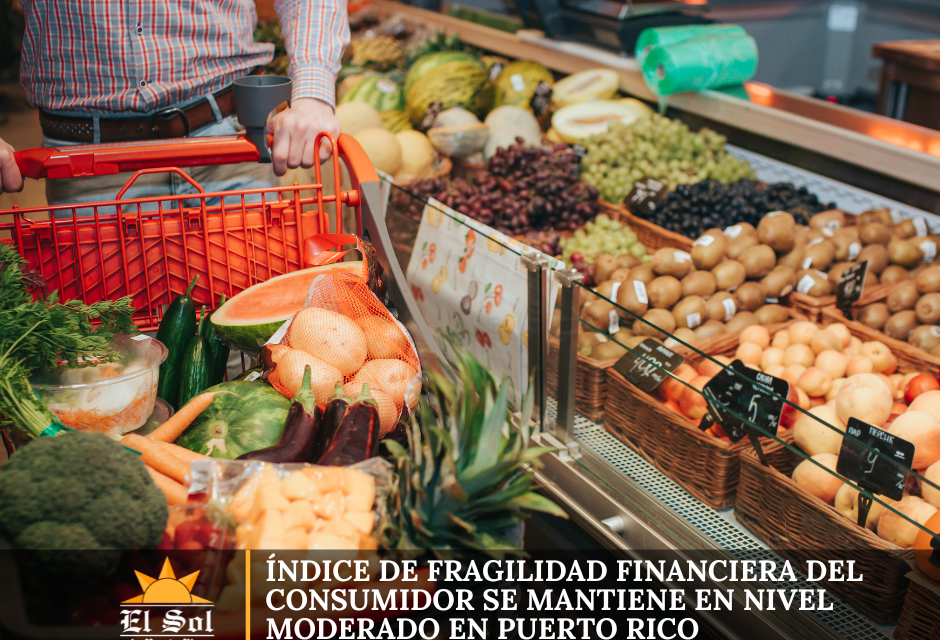
Puerto Ricans' wallets are feeling more pressure than the headlines suggest. The Consumer Financial Fragility Index (FFI) published by Estudios Técnicos Inc. (ETI) rose from 33.7 points in the first quarter to 42.2 in the second quarter of 2026 — an 8.5-point jump that economist Leslie Adames called "an early warning signal" for the second half of the year 1.
The index, which measures household economic vulnerability on a 0-to-100 scale, still remains in the "moderate" range and far from the pandemic peak of 64.7 points recorded in 2020. But the direction is concerning: three of the four main components moved in the wrong direction.
The Numbers That Matter
Consumer loan delinquency — credit cards, personal loans, lines of credit — rose from 2.62% to 3.07% between quarters 1. In mortgages, delinquency went from 1.10% to 1.23%. Meanwhile, the unemployment rate ticked up slightly from 5.60% to 5.80%, and real per capita income fell from $24,748 to $24,516 1.
The average credit card interest rate holds at 20.94%, one of the highest in the U.S. market, meaning every unpaid dollar of debt compounds quickly 2.
The only component that improved was the consumer confidence index, which rose slightly — but economists warn that confidence can be a lagging indicator when real wallet conditions are already deteriorating.
What It Means for You
If you are current on your payments, this index does not mean you should panic. But it is time to review your financial situation with fresh eyes. The increase in consumer delinquency indicates that more families are having difficulty covering minimum payments on their debts — and that tends to worsen when real income declines.
For those with variable-rate mortgages or considering refinancing, the increase in mortgage delinquency suggests that banks could tighten their approval criteria in the coming months.
For merchants and small business owners, it is a signal that the average consumer has less room to spend — which could affect second-half sales, especially the holiday season.
How to Do It — Checklist to Protect Your Wallet
- Check your credit report for free at AnnualCreditReport.com — you are entitled to one free report per year from each bureau (Equifax, Experian, TransUnion). Verify there are no errors inflating your debt.
- Calculate your debt-to-income ratio by dividing your monthly debt payments by your gross income. If it exceeds 36%, you are in the risk zone.
- Prioritize paying credit cards with the highest rates first (avalanche method). At an average 20.94% interest rate, every month you carry a balance costs you.
- Create or update an emergency fund — even $25 per paycheck in a separate account. The minimum goal is 3 months of fixed expenses.
- Freeze unnecessary subscriptions — review your bank statement for recurring charges you no longer use.
- If you are behind on payments, call the creditor BEFORE it goes to collections. Most offer payment plans or temporary interest reduction if you ask proactively.
What Comes Next
ETI will publish the third quarter index in November, but economists already anticipate that the trend will continue upward if real income does not improve. The drought context — which has made water and fresh food more expensive — and LUMA's electric rates add additional pressure to the household budget 3.
The Fiscal Oversight Board has a fiscal plan review scheduled for September that could include adjustments to the government's revenue projections. If those adjustments are downward, they could limit the government's ability to offer additional consumer relief.
The bottom line: Puerto Rico is not in a consumer financial crisis, but the yellow lights are flashing. It is better to act now than to wait for the light to turn red.
Sources: 1 Periódico El Sol — Consumer Financial Fragility Index, Q2 2026 2 FDIC Quarterly Banking Profile — Puerto Rico market data 3 Estudios Técnicos Inc. — quarterly economic analysis
CoquiList summary and local context. Read the linked sources for the original reporting.
Ask about this story
Ask anything about this article — in English or Spanish.
Log in to ask about this story.
Comments (0)
Log in to join the conversation.
No comments yet — be the first.