Farmers and ranchers in 43 towns can now apply for federal drought aid: here is what you need to do
CoquiList · With information from noticel.com
If you run a farm, raise livestock, keep beehives or grow crops in any of the 43 municipalities under severe or extreme drought, the government confirmed this Sunday that you can now claim federal aid, but you have to act: the assistance does not arrive on its own. The Puerto Rico Department of Agriculture announced that affected farmers and ranchers can contact the Farm Service Agency (FSA) of the federal Department of Agriculture (USDA) right away to verify eligibility and file applications under at least eight emergency programs that are already open 12.
Agriculture Secretary Irving Rodríguez Torres was blunt about the main requirement: you must be registered. "It is not automatic. They must have the information. They should go through the Farm Service Agency offices and register their farm, register their crops," the official explained, also urging producers to document every loss with evidence 2. The federal agency set up five dedicated phone lines and an email address, [email protected], to handle drought cases 1.
The context: the worst drought in years
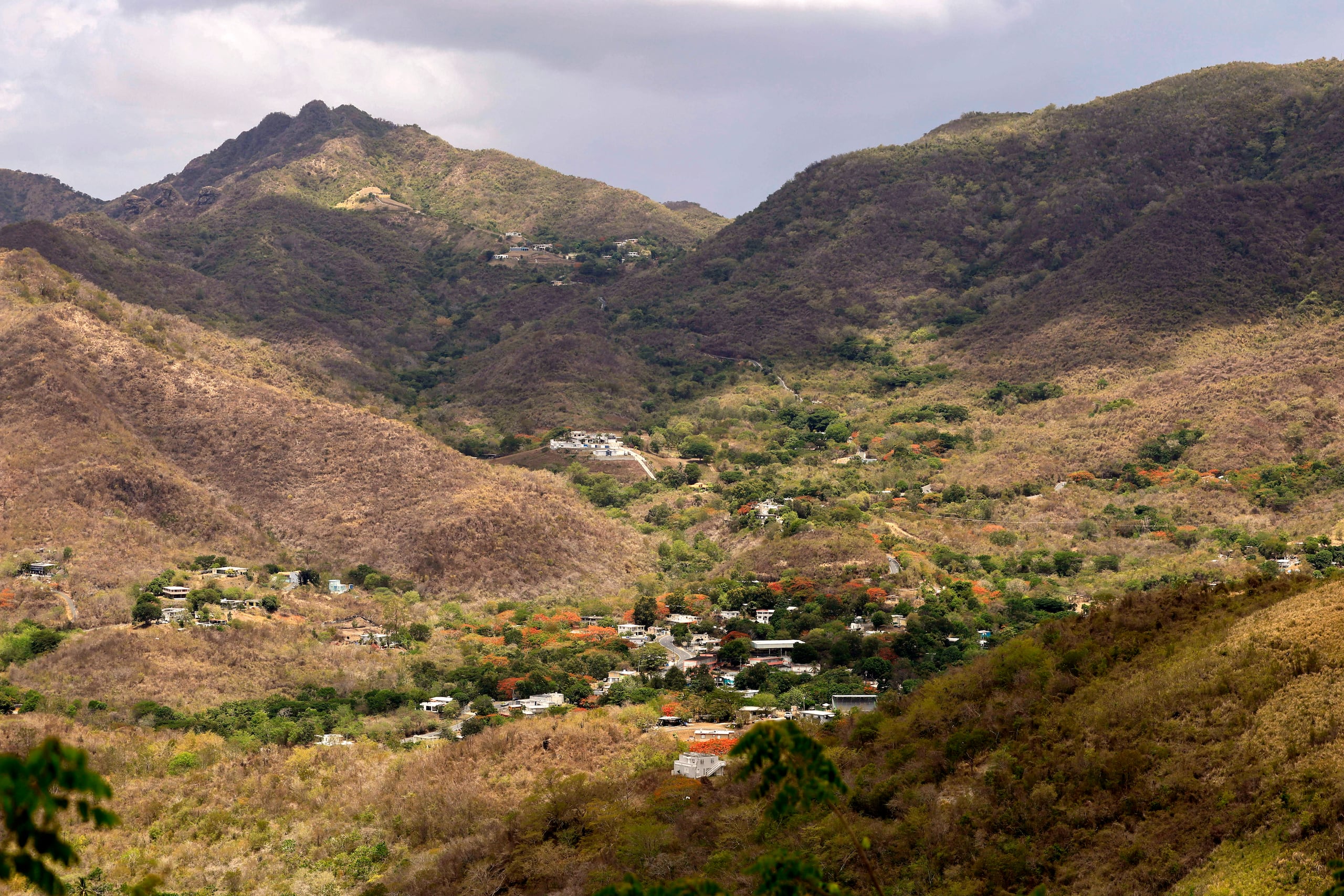
Puerto Rico is going through a water crisis that already forced rationing in the metro area starting August 7 because of the levels at the Carraízo reservoir 3. According to the U.S. Drought Monitor, as of the August 11 reading, 78.27% of the island was under some level of drought: 17.02% in extreme drought (D3) and 36.91% in severe drought (D2), with Santa Isabel, Guánica, Salinas and Coamo almost entirely under the extreme category 3. The situation hits the southern agricultural heartland head-on, where much of the island's root crop, vegetable and livestock production is concentrated.
Against that backdrop, Governor Jenniffer González and Rodríguez Torres sent a letter to federal Agriculture Secretary Brooke Rollins asking her to fast-track the disaster designations that unlock even more aid 2. While that request moves forward, several programs are already open because they do not require a Secretarial Disaster Declaration: they trigger directly off U.S. Drought Monitor data once a municipality falls into category D2 or D3 1.
The programs and the numbers
The 43 municipalities eligible for being in D2 or D3 are: Aguas Buenas, Aibonito, Arroyo, Barranquitas, Cabo Rojo, Caguas, Canóvanas, Carolina, Cayey, Ceiba, Cidra, Coamo, Comerío, Culebra, Fajardo, Guánica, Guayama, Guayanilla, Guaynabo, Gurabo, Humacao, Juana Díaz, Juncos, Lajas, Las Piedras, Loíza, Luquillo, Naguabo, Orocovis, Peñuelas, Ponce, Río Grande, Sabana Grande, Salinas, San Germán, San Juan, San Lorenzo, Santa Isabel, Trujillo Alto, Vieques, Villalba, Yabucoa and Yauco 1.
The available programs include 12:
- Livestock Forage Program (LFP): compensates ranchers for eligible grazing losses; no disaster declaration required.
- Noninsured Crop Disaster Assistance Program (NAP): covers uninsurable crops that were lost.
- Emergency Assistance for Livestock, Honeybees and Farm-Raised Fish (ELAP): losses of livestock, bees and farmed fish not covered by other programs.
- Livestock Indemnity Program (LIP): pays for animal deaths above normal mortality.
- Tree Assistance Program (TAP): replanting of commercial trees and crops such as papaya and passion fruit.
- Emergency Conservation Program (ECP): funds and technical assistance to rehabilitate land and irrigation systems.
- FSA emergency loans: cover up to 100% of production or physical losses, capped at $500,000 per producer, with applications due within eight months of the disaster designation 4.
- Annual payment deferment (Disaster Payment Deferment) for FSA borrowers in affected areas 1.
What it means for you
If your agricultural operation sits in one of the 43 towns, you have access today to compensation for lost pasture, crops and animals, but only if your farm is registered with FSA and your losses are documented. If you have never enrolled in FSA farm records, that paperwork is your first step and can be the difference between getting paid or being left out. And if you carry FSA loans, you can ask to defer this year's payment while you recover 12.
How to do it / Checklist
- Call the FSA state office in Puerto Rico: 787-294-1613, 787-675-2364, 787-930-2091, 787-908-2209 or 787-675-6577, or write to [email protected] 1.
- Register your farm and your crops at your area FSA office if your farm records are not current; bring identification and proof of your operation 2.
- Document losses starting now: dated photos, livestock inventories, feed and water receipts, and planting records 12.
- Ask specifically about LFP if you raise livestock, NAP if your crops were uninsured, ELAP for bees and fish, LIP for animal deaths and TAP for lost trees 1.
- If you need capital, prepare the emergency loan application: up to $500,000 and eight months to file once the designation arrives 4.
- Check your municipality's classification every Thursday at droughtmonitor.unl.edu, because your eligibility depends on it 1.
What comes next
Once a municipality logs eight consecutive weeks in D2, or hits D3 or D4 during the growing season, the Secretarial Disaster Declaration triggers automatically, opening emergency loans and payment deferrals to more producers 12. The local Department of Agriculture also built an app for its agronomists to measure losses farm by farm, and Rodríguez Torres said the agency will announce later whether there will be local recovery incentives or exact-loss compensation 2.
Sources
- NotiCel — Agricultores y ganaderos pueden solicitar desde ya asistencia por sequía
- Primera Hora — Agricultores deben registrarse con el Farm Service para recibir asistencia federal por la sequía
- El Nuevo Día — Sequía extrema se expande y ya cubre casi una quinta parte de Puerto Rico
- USDA Farm Service Agency — Emergency Farm Loans
Sources
CoquiList summary and local context. Read the linked sources for the original reporting.
Ask about this story
Ask anything about this article — in English or Spanish.
Log in to ask about this story.
Comments (0)
Log in to join the conversation.
No comments yet — be the first.